Russian Olive Honey: The Rare Mountain Honey Most Pakistanis Have Never Tasted
Quick answer: Russian Olive honey is a distinctive raw honey made by bees foraging on the fragrant silver-leaved Russian Olive tree (locally called sanjhli or sinjur), which grows across the river valleys of Gilgit-Baltistan. It has a bolder, more aromatic flavour than common honeys, and because the tree grows mainly in northern mountain regions, genuine Russian Olive honey is rarely found outside Gilgit-Baltistan.
Ask anyone from Gilgit about the smell of early summer, and they will mention the same thing: the almost overwhelming perfume of Russian Olive blossoms drifting along the riverbanks. When those small yellow flowers open, our bees ignore everything else. The honey they produce from that bloom is unlike anything sold in a typical Pakistani supermarket.
What Is the Russian Olive Tree?
Despite its name, the Russian Olive (Elaeagnus angustifolia) is not a true olive. It is a hardy, silvery tree that thrives in dry mountain climates and grows abundantly along the rivers and irrigation channels of Gilgit-Baltistan. Locals know it as sanjhli or sinjur, and its intensely fragrant yellow flowers appear in late spring.
Those flowers are rich in nectar, and the honey that comes from them carries their signature: a strong floral aroma, a deep flavour, and a character that reflects the harsh, clean landscape it comes from.
What Does Russian Olive Honey Taste Like?
Where Robinia honey is soft-spoken, Russian Olive honey is expressive:
- Aroma: unmistakably floral and perfumed — you smell the blossom before you taste the honey
- Flavour: bold and rich, sweet with a warm, lightly spiced depth
- Colour: golden to amber, darker than Robinia
People who like their honey to taste like something — who find commercial honey flat and boring — tend to become lifelong Russian Olive customers. It is our founders’ personal favourite for winter mornings.
Benefits of Russian Olive Honey
As with all raw honey, the practical benefits come from the fact that it is unheated, unfiltered, and unblended:
1. Rich in natural antioxidants. Darker, bolder honeys generally carry higher levels of phenolic compounds than lighter ones. Russian Olive honey sits comfortably in that category.
2. Traditional winter remedy. In Gilgit-Baltistan, Russian Olive honey has long been the household choice for sore throats, coughs, and cold-weather fatigue — usually taken in warm water or with local herbal teas.
3. Supports digestion. Raw honey contains natural enzymes from the hive. Many of our customers take a spoon after heavy meals; it is a habit as old as the valleys here.
4. A natural energy source. Shepherds and farmers in our region have used honey as travel food for generations. Its natural sugars provide quick, clean energy without the crash of refined sugar.
As always: honey supports a healthy routine, but it is not a medicine, and diabetics should speak with their doctor before regular use.
Why You Won’t Find Real Russian Olive Honey in Most Shops
Two reasons. First, the tree itself is concentrated in northern Pakistan — the big honey brands operating from Punjab and Sindh simply do not have access to this bloom. Second, the harvest is small and seasonal. Most of our Russian Olive honey each year sells out to returning customers before winter ends.
That scarcity has an unfortunate side effect: mislabelling. If you see “Russian Olive honey” sold cheaply and available year-round in bulk, be skeptical. Genuine single-bloom mountain honey does not work that way.
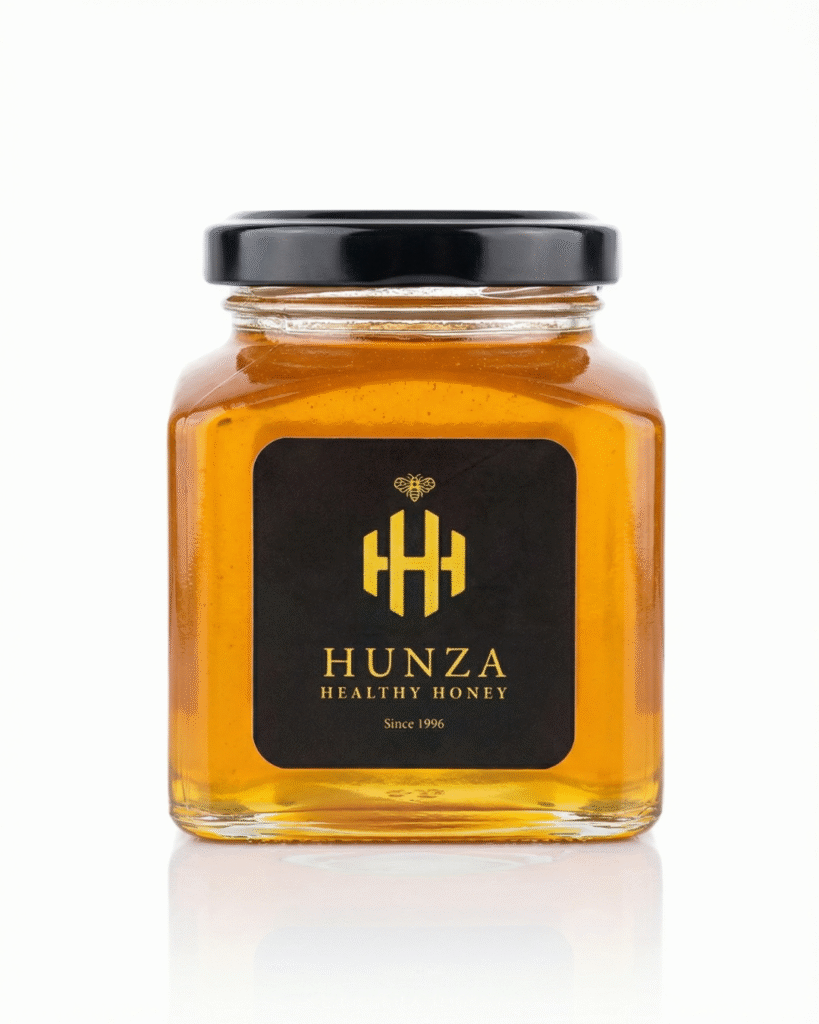
Our Russian Olive honey is harvested from our own hives around Gilgit during the sanjhli bloom, then jarred by hand at our home base in Sonikot. We sell it in 150g, 250g, 500g, and 1kg jars, including a 1kg jar with real honeycomb inside — the closest thing to eating honey straight from the hive.
How to Enjoy It
- In warm water or milk before bed — the traditional Gilgit way
- Stirred into desi ghee and spread on hot roti (try it once; thank us later)
- Over yogurt, kheer, or fruit
- Straight from the spoon when a cough or sore throat is bothering you
Frequently Asked Questions
What is Russian Olive honey?
It is raw honey produced by bees foraging on the fragrant blossoms of the Russian Olive (sanjhli/sinjur) tree, which grows in the river valleys of Gilgit-Baltistan. It has a bold, aromatic, floral flavour and golden-amber colour.
Is Russian Olive honey available everywhere in Pakistan?
Rarely. The tree grows mainly in northern mountain regions, so authentic Russian Olive honey comes almost exclusively from Gilgit-Baltistan producers. We ship it nationwide from Gilgit.
What does Russian Olive honey taste like?
Bold and richly floral, with a warm depth that lighter honeys like Robinia don’t have. The blossom’s famous perfume comes through clearly in the honey.
What is the price of Russian Olive honey in Pakistan?
Our current range runs from ₨600 for 150g to ₨4,000 for 1kg, harvested and shipped directly from our hives in Gilgit. Prices reflect each season’s harvest.
Which is better — Robinia or Russian Olive honey?
Neither is “better”; they are different. Robinia is light, mild, and slow to crystallize — ideal for daily use and children. Russian Olive is bold and aromatic — ideal for winter, remedies, and anyone who loves strong flavour. Many customers keep both.
Hunza Healthy Honey — a women-led beekeeping family in Gilgit, shipping raw single-origin honey across Pakistan. Shop now or call 0355-4568079.